
Intro
Can a small component have a big sustainability impact?
A sewing thread may be small, but its sustainability profile is anything but simple.
The sustainability of a thread is shaped by the interplay of many different factors – from the raw material and where and how it is produced to its technical performance, its role in the finished product and what happens at the end of its useful life.
There is therefore no single material, certification or carbon footprint that defines whether a thread is “sustainable”. Instead, sustainability needs to be considered as a whole and across the entire product lifecycle.
Short definition
Sewing thread sustainability describes the environmental, technical and circularity factors that shape the sustainability profile of a sewing or embroidery thread across its lifecycle. These include raw materials, production, resource use, performance, durability and end-of-life options.
Why does this matter?
When selecting a thread, focusing on just one sustainability characteristic can give an incomplete picture. A recycled or bio-based material, for example, may offer advantages in one area while creating different technical, environmental or economic trade-offs elsewhere.
The relevant question is therefore not simply “Is this material sustainable?”, but rather:
“Is this the right solution for this application and its specific sustainability requirements?”
The answer depends on how different factors come together.
A combination of factors
The sustainability profile of a sewing or embroidery thread is influenced by several interconnected factors.
Raw materials
The choice of raw material can have a significant influence on the environmental footprint of a sewing or embroidery thread.
Conventional synthetic threads are often based on fossil resources. Recycled, bio-based and other innovative materials can offer alternatives, but each comes with its own opportunities and trade-offs.
The key question is therefore not simply whether a material is recycled, bio-based or biodegradable, but whether it provides the right combination of environmental performance, technical performance and suitability for the application.
Energy, production and location
How and where a thread is produced also influences its sustainability profile.
Electricity, heat, water and other resources are required during manufacturing. The energy mix and availability of renewable electricity at a production site, as well as local conditions such as water availability, can therefore affect environmental impacts.
Increasing the use of renewable electricity, improving energy efficiency, reducing water consumption and optimizing production processes can all contribute to reducing these impacts.
At AMANN, this is addressed through measures across its global production network – from renewable electricity and energy efficiency to water management and process optimization.
Performance and durability
A sewing thread has an important job: it holds products together.
Strength, durability and reliable sewing performance are therefore not separate from sustainability. A thread that contributes to a longer-lasting product, reduces production failures or performs reliably in demanding applications can help avoid unnecessary material use, waste and replacement.
For AMANN, sustainability and performance go hand in hand. The most sustainable solution is not necessarily the one with the lowest impact in one individual category, but the one that delivers the right balance of sustainability and performance for the intended application.
Circularity and end of life
A thread's role does not necessarily end when a garment or textile product reaches the end of its useful life.
Depending on the application and end-of-life scenario, threads can support different circularity strategies – for example, through alternative raw materials or by enabling easier disassembly.
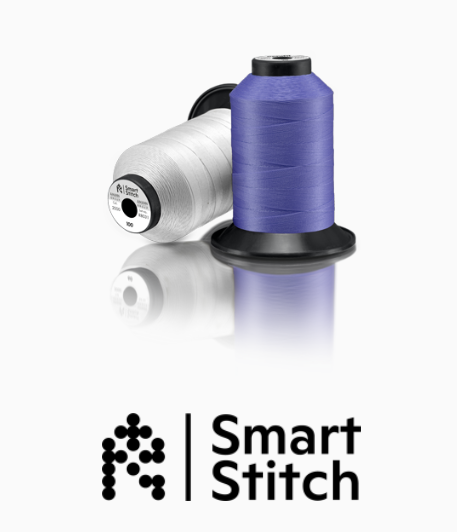
One example is AMANN Smart Stitch™, a heat-dissolvable sewing thread designed to enable easier separation of textile components. This can support disassembly and help recover materials more efficiently for recycling.
There is therefore no single circular thread solution. Different products and end-of-life scenarios require different approaches.
What does this mean for customers?
Customers increasingly need to make sustainability decisions at product level – and the thread is part of that picture.
They may need information about material origin, Product Carbon Footprint, chemical compliance, recycled content or circularity options. The relevant information depends on the product, application and sustainability objective.
For AMANN, this means sustainability is not only about reducing our own environmental impact. It is also about helping customers make informed decisions through:
- Product Carbon Footprint data
- Lower-impact and alternative material options
- Certifications and compliance information
- Solutions for circular product concepts
- Technical expertise to identify the right thread for a specific requirement
This is where sustainability and AMANN's Beyond Threads approach come together: understanding not only the thread itself, but also the application, the customer's requirements and the role our products can play within the wider textile value chain.
Data helps turn transparency into action
Reliable data is essential for understanding where environmental impacts occur and where improvements can make the greatest difference.
Corporate and Product Carbon Footprints, supplier data and other environmental information help AMANN identify emission hotspots, compare material and production options and track progress over time.
Better data is therefore not only about reporting. It helps turn transparency into action.
Sustainability is about the whole system
There is no universally “sustainable” thread.
The right solution depends on how the thread is made, produced, used and managed at the end of its useful life. Key factors include:
- Raw materials
- Energy and production
- Water and resource use
- Chemicals and product safety
- Performance and durability
- Circularity and end-of-life
- Transportation and supply chains
- Reliable environmental data
Understanding these connections is the foundation of AMANN's approach to sustainable product development.
Because sustainability is not a property of the thread alone. It is the result of how the material, production, application and end-of-life fit together.
Key Takeaway
The sustainability of a sewing thread depends on more than its material. The right solution balances environmental performance, technical requirements and circularity across the product lifecycle.
Explore next
Quick facts
| Property | Value |
|---|---|
| Category | Textile sustainability |
| Product | Sewing and embroidery thread |
| Main factors | Raw materials, production, resource use, performance, circularity |
| Lifecycle | Raw material to end of life |
| Key considerations | Environmental impact, technical performance, application suitability |
| Sustainability options | Recycled, bio-based and other alternative materials |
| Related topics | Product Carbon Footprint, sustainable materials, circular products, textile recycling |
| Typical applications | Apparel, footwear, automotive, home textiles, technical textiles |
Also known as
Technical terms
- Sewing thread sustainability
- Sustainable sewing thread
- Sustainable embroidery thread
- Sustainable thread
- Sustainable textile thread
- Sustainable sewing materials
- Thread sustainability
- Sustainable product development
- Circular sewing thread
- Eco-friendly sewing thread
Common descriptions
People often search for:
- What makes a sewing thread sustainable?
- How sustainable is sewing thread?
- How do I choose a sustainable sewing thread?
- Which sewing thread is the most sustainable?
- Is recycled sewing thread more sustainable?
- Is bio-based sewing thread sustainable?
- What is the most sustainable thread material?
- How does sewing thread affect the sustainability of a garment?
- How can sewing thread support textile recycling?
- What factors determine the sustainability of a sewing thread?
- How do I compare sustainable sewing threads?
- What is a sustainable alternative to conventional sewing thread?
Alternative terminology
Different industries and software providers may use slightly different terminology.
- Sustainable thread
- Eco-friendly thread
- Lower-impact thread
- Recycled thread
- Bio-based thread
- Circular thread
- Sustainable textile thread
International terminology
| Language | Common terminology |
|---|---|
| English | Sustainable sewing thread, Sewing thread sustainability, Sustainable thread, Sustainable textile thread |
| German | Nachhaltiges Nähgarn, Nachhaltigkeit von Nähgarn, Nachhaltiges Garn |
| French | Fil à coudre durable, Durabilité du fil à coudre, Fil à coudre écoresponsable |
| Italian | Filo per cucire sostenibile, Sostenibilità del filo per cucire |
| Spanish | Hilo de coser sostenible, Sostenibilidad del hilo de coser |
| Chinese | 可持续缝纫线, 缝纫线可持续性 |
| Vietnamese | Chỉ may bền vững, Tính bền vững của chỉ may |
FAQ
-
The sustainability of a sewing thread depends on several factors, including raw materials, production processes, energy and resource use, technical performance, durability, circularity and end-of-life options. No single material or certification determines whether a thread is sustainable.
-
There is no universally most sustainable sewing thread. The right choice depends on the application, technical requirements, environmental objectives, energy mix, and end-of-life scenario. Recycled, bio-based and other alternative materials can offer different sustainability benefits and trade-offs.
-
Recycled sewing thread can reduce reliance on virgin resources and offer environmental benefits compared with conventional alternatives. However, its overall sustainability depends on factors such as the recycled material, production process, performance and the specific application.
-
Bio-based sewing thread can reduce reliance on fossil resources, but being bio-based does not automatically mean that a thread has a lower overall environmental impact. The raw material source, production process, durability and end-of-life scenario also need to be considered.
-
Although sewing thread represents only a small part of a textile product, it can influence product durability, production efficiency and end-of-life options. The right thread can help extend product life, reduce production waste and, in some applications, support disassembly and recycling.
-
Sewing thread can contribute to the sustainability of a garment through its material, production footprint, durability and role in the garment's end of life. A thread that performs reliably and supports a longer product lifetime can help reduce material waste and replacement.
-
Certain sewing threads can support recycling by enabling easier separation of textile components. For example, heat-dissolvable sewing threads such as AMANN Smart Stitch™ can facilitate disassembly and help recover materials for recycling.
-
Start by defining the sustainability objective and technical requirements of the application. Then consider factors such as raw material, Product Carbon Footprint, production, chemical compliance, durability, circularity and end of life to identify the solution that provides the right overall balance.