

How AMANN calculates Product Carbon Footprints
Intro
What does a product's carbon footprint actually tell you?
A Product Carbon Footprint (PCF) provides information about the greenhouse gas emissions associated with a specific product. Unlike a Corporate Carbon Footprint (CCF), which looks at the emissions of an entire organization, a PCF focuses on the climate impact of an individual product.
This product-level perspective helps customers understand product-related emissions, compare alternatives and integrate emissions data into their own sustainability assessments.
Short definition
A Product Carbon Footprint (PCF) measures the greenhouse gas emissions associated with a specific product across defined stages of its life cycle. AMANN calculates PCFs using a cradle-to-gate approach based on ISO 14067 and the Catena-X Product Carbon Footprint Rulebook.
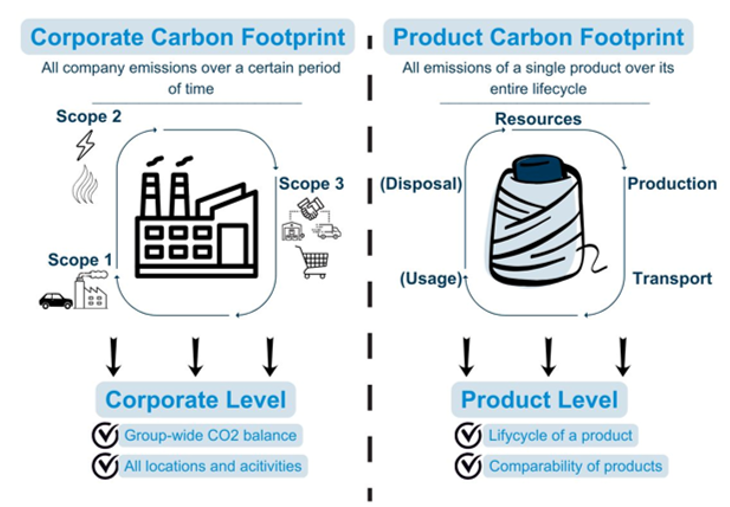
In concrete terms, a PCF helps make product-related emissions more transparent and shows where the main emission sources occur within the assessed value chain.
In this section, you will learn what an AMANN PCF includes, how it is calculated, which standards and data sources are used, how PCF results should be interpreted and how the data can support customer carbon accounting, Scope 3 reporting and more informed product decisions.
Why does this matter?
A product-level carbon footprint makes climate impacts visible at the level where many purchasing and product decisions are made.
What does an AMANN PCF include?
AMANN calculates Product Carbon Footprints using a cradle-to-gate approach. This means that the assessment covers relevant emissions from raw material extraction and processing through manufacturing until the product leaves AMANN's facilities.
The calculation includes emissions from relevant lifecycle stages such as:
- Raw material extraction and production
- Processing of materials
- Manufacturing processes at AMANN
The use phase and end-of-life treatment are not included in AMANN's PCFs because these stages depend on how customers use, process and dispose of the product.
By focusing on the stages that can be assessed consistently across products, AMANN provides customers with a transparent and comparable basis for evaluating product-related emissions.
How are AMANN PCFs calculated?
Reliable Product Carbon Footprints require a consistent and transparent methodology. AMANN calculates its PCFs in accordance with internationally recognized standards and industry frameworks for carbon footprinting.
Our methodology and standards
AMANN's PCFs are calculated based on DIN EN ISO 14067, which defines principles and requirements for quantifying and reporting the carbon footprint of products.
AMANN's methodology is also guided by the Catena-X Product Carbon Footprint Rulebook, supporting standardized approaches for calculating and exchanging product-related emissions data across industrial value chains.
Together, these frameworks provide a consistent basis for identifying, calculating and documenting greenhouse gas emissions associated with products.

What does this mean for customers?
Using recognized methodologies helps make AMANN's PCFs:
Transparent
The calculation approach, system boundaries and relevant emission sources are clearly defined.
Comparable
Consistent calculation principles provide a common basis for comparing product-related emissions.
Methodologically robust
The PCFs are based on established international standards and industry frameworks.
Usable for sustainability assessments
Product-level emissions data can support customers' sustainability assessments, Scope 3 calculations and other reporting processes.
Key Takeaway
A PCF translates the greenhouse gas emissions of a specific product into a measurable figure – providing a basis for transparency, comparison and more informed decisions.
How reliable are AMANN Product Carbon Footprints?
Intro
What makes a Product Carbon Footprint reliable?
The reliability of a Product Carbon Footprint depends not only on the calculation methodology but also on the quality of the underlying data and the assumptions used.
At AMANN, we continuously improve the quality and representativeness of our Product Carbon Footprints by increasing the use of product- and supplier-specific data and reducing reliance on generic emission factors.
In this section, you will learn why data quality matters, what the Primary Data Share (PDS) tells you and how AMANN works with suppliers to make its PCFs increasingly product-specific and transparent.
Short definition
The reliability of a Product Carbon Footprint depends on the quality, relevance and representativeness of the underlying data. Using more product- and supplier-specific primary data can reduce reliance on generic emission factors and make PCF results more representative of a product's actual emissions.
Improving data quality through supplier collaboration
Product Carbon Footprints can be based on different levels of data quality. Generic database values can provide useful estimates, but product- and supplier-specific primary data can provide a more representative picture of a product's actual emissions.
AMANN therefore works closely with suppliers to collect more detailed emissions information for key raw materials. In 2025, we further refined our qualitative and quantitative supplier survey to improve the availability and quality of primary data.
Today, around 78% of our key raw materials are covered by primary data collected directly from suppliers. This helps make AMANN's Product Carbon Footprints more representative than calculations based solely on industry averages or generic emission factors.
Primary Data Share as a quality indicator
To make data quality more transparent, every AMANN PCF document includes the Primary Data Share (PDS).

The PDS indicates how much of the calculation is based on primary data from suppliers and operational processes rather than secondary database values.
For example, two products may be made from the same type of polyester yarn and follow the same calculation methodology. If one PCF is based on verified, supplier-specific emissions data while the other relies mainly on generic industry averages, the first can provide a more representative picture of the product's actual carbon footprint.
In general, the higher the Primary Data Share, the more product-specific and representative the carbon footprint becomes.
Why does this matter?
A carbon footprint is only as useful as the data behind it. Better data can make results more representative, reduce uncertainty and support better decisions.
What does this mean for customers?
Higher-quality PCF data can help customers:
- Improve the accuracy of Scope 3 calculations
- Strengthen sustainability and ESG reporting
- Compare products based on more representative emissions data
- Communicate product-related emissions with greater confidence
- Reduce uncertainty associated with generic emission factors
Data quality is an ongoing process
Improving PCF data is not a one-time exercise. As supplier collaboration expands and more primary data becomes available, AMANN continues to refine its Product Carbon Footprints.
The goal is to provide customers with increasingly precise, transparent and representative product-level carbon data that can support better sustainability decisions.
Key Takeaway
The more relevant and product-specific the underlying data, the more representative and useful a Product Carbon Footprint can become.
Using PCFs for sourcing and Scope 3 reporting
Intro
Can a Product Carbon Footprint influence what you buy?
Product Carbon Footprints make the climate impact of individual products visible. This allows customers to use product-specific emissions data not only for sustainability reporting, but also to compare products and support purchasing and sourcing decisions.
For many companies, Scope 3 emissions represent a significant share of their overall carbon footprint. At the same time, these emissions can be challenging to quantify because they depend on data from suppliers and across the value chain.
AMANN's Product Carbon Footprints provide product-specific carbon data that can help customers understand the emissions associated with purchased products – and use this information to support both sourcing decisions and Scope 3 calculations.
Short definition
Product Carbon Footprints (PCFs) provide product-level greenhouse gas emissions data that can support sourcing decisions and Scope 3 reporting. By using product-specific emissions data instead of relying solely on generic emission factors, companies can better understand the climate impact of purchased products and materials.
Why does this matter?
Carbon data can turn sustainability from a general ambition into an additional, measurable criterion in sourcing and product decisions.
What does this mean for customers?
PCFs give customers product-level emissions data that can complement traditional purchasing criteria such as quality, performance, availability and price. They can also support Scope 3 reporting by replacing generic assumptions with more product-specific information.
Comparing products using PCFs
Choosing a lower-carbon product is not always about selecting the product with the lowest single emission value. To make meaningful comparisons, it is important to understand which factors influence a product's carbon footprint and whether the products being compared have similar technical properties and system boundaries.
Differences in PCF results can be influenced by factors such as:
- Type and origin of raw materials
- Recycled versus virgin content
- Production technologies and efficiency
- Electricity mix at manufacturing sites
- Supplier-specific emissions data
- Transportation and logistics
PCFs make these differences visible and provide a data-based basis for comparing products and identifying potential alternatives.
Looking at the full value chain
Individual sustainability features do not automatically determine the overall carbon footprint of a product.
For example, recycled materials can reduce the demand for virgin resources, but their overall carbon impact also depends on factors such as recycling processes, energy sources, manufacturing efficiency and transportation.
Looking at the complete product footprint helps customers understand these interdependencies and avoid drawing conclusions from individual product characteristics alone.
Using PCFs in sourcing decisions
Purchasing decisions traditionally focus on criteria such as quality, performance, availability and price. As sustainability becomes increasingly relevant, product carbon data can add another dimension to these decisions.
With PCF data, purchasing teams can consider questions such as:
- Which option has the lower carbon footprint?
- How do different raw materials affect product emissions?
- Does the use of renewable electricity influence the footprint?
- Could choosing an alternative product help reduce Scope 3 emissions?
For example, two sewing threads may offer similar technical performance but have different carbon footprints due to differences in raw materials, manufacturing processes or energy sources.
PCFs therefore do not replace existing purchasing criteria. Instead, they provide an additional layer of information that helps customers make more transparent and informed sourcing decisions.
Supporting Scope 3 reporting
Product-specific carbon data can also help customers improve the quality of their Scope 3 calculations.
Instead of relying solely on generic emission factors or industry averages, customers can use product-level emissions data from suppliers to better represent the products they actually purchase.
AMANN PCFs can help customers:
- Improve the accuracy of Scope 3 calculations
- Strengthen sustainability and ESG reporting
- Support reporting requirements such as CSRD
- Respond to increasing customer and stakeholder requests for carbon data
- Identify emission hotspots within purchased materials
- Reduce reliance on generic emission factors
From better data to better decisions
Using PCF data for both sourcing and Scope 3 reporting creates a stronger link between carbon transparency and climate action.
Product-level emissions data can help customers understand where emissions arise, compare alternatives and identify opportunities to reduce the carbon footprint of purchased materials.
Built on recognized methodologies
AMANN Product Carbon Footprints are calculated in accordance with internationally recognized standards and are guided by the principles of the Catena-X Product Carbon Footprint Rulebook.
This supports consistent carbon accounting across supply chains and provides customers with product-level emissions data that can be integrated into their own sustainability and climate management processes.
Key Takeaway
PCFs do not replace traditional sourcing criteria – they add carbon data as another factor for comparing products and understanding their value-chain impact.
How to request an AMANN Product Carbon Footprint
Intro
Need the carbon footprint of an AMANN thread? Here's how to get it.
Access to reliable product carbon data supports better sustainability decisions, transparent reporting and informed product choices.
Since 2025, AMANN has been providing Product Carbon Footprints for its main brand families, with coverage continuously expanding.
How to request a PCF
If you need an AMANN Product Carbon Footprint, simply contact your AMANN sales representative with the product you are interested in.
Our team will:
- Check whether a PCF is already available
- Provide the relevant documentation
- Answer questions regarding methodology or data quality
- Support you in interpreting the results where needed
If a PCF is not currently available, we will advise on possible alternatives or future availability.
Key Takeaway
Need a PCF? Contact your AMANN sales representative or the GSI team with the product you are interested in – we will check availability and provide the relevant information.
Explore next
Curious to learn more?
→ What are Corporate Carbon Footprints?
→ What are AMANN's climate targets?
→ How does AMANN source responsibly?
Quick facts
| Property | Value |
|---|---|
| Full term | Product Carbon Footprint (PCF) |
| Definition | Measurement of the greenhouse gas emissions associated with a specific product |
| System boundary | Cradle-to-gate |
| Key standards | DIN EN ISO 14067 and Catena-X Product Carbon Footprint Rulebook |
| Measurement unit | Carbon dioxide equivalents (CO₂e) |
| Primary data share (PDS) | Indicator of the proportion of a PCF calculation based on primary data |
| Main data sources | Supplier-specific emissions data, operational data and secondary databases |
| Business applications | Product comparison, sustainable sourcing and Scope 3 emissions reporting |
| How to request an AMANN PCF | Contact your AMANN sales representative with the product details |
Also known as
Technical terms
- Product Carbon Footprint (PCF)
- Product carbon footprint assessment
- Product-level carbon footprint
- Product greenhouse gas emissions
- Product carbon accounting
- Product carbon footprint calculation
- Cradle-to-gate carbon footprint
- Product-level emissions data
- Primary Data Share (PDS)
- Product carbon footprint data quality
- Product carbon footprint methodology
Product life cycle emissions
Common descriptions
People often search for:
- What is a Product Carbon Footprint?
- What does PCF mean?
- How is a Product Carbon Footprint calculated?
- How to calculate a product carbon footprint
- How to measure product emissions
- Understanding Product Carbon Footprints
- Understanding PCF data
- Measuring the carbon footprint of a product
- Calculating product-level emissions
- How to calculate product emissions in CO₂e
- What is a cradle-to-gate carbon footprint?
- What does cradle-to-gate mean?
- Which emissions are included in a PCF?
- Which lifecycle stages are included in a Product Carbon Footprint?
- How PCFs support Scope 3 reporting
- Using PCF data for sourcing decisions
- Comparing product carbon footprints
- Product carbon footprint ISO 14067
Catena-X Product Carbon Footprint
Alternative terminology
Different industries and software providers may use slightly different terminology.
- Product carbon emissions
- Product carbon footprinting
- Product-level greenhouse gas accounting
- Product GHG emissions assessment
- Product emissions assessment
- Product carbon footprint analysis
- Product life cycle carbon assessment
- Cradle-to-gate emissions assessment
- Supplier-specific carbon footprint data
- Product emissions data for Scope 3
- Product sustainability data
- Carbon footprint data for procurement
International terminology
| Language | Common terminology |
|---|---|
| English | Product Carbon Footprint, Product Carbon Footprint Assessment, Product-Level Emissions |
| German | Product Carbon Footprint, CO₂-Fußabdruck eines Produkts, produktbezogene Treibhausgasemissionen |
| French | Empreinte carbone d'un produit, bilan carbone d'un produit |
| Italian | Impronta di carbonio del prodotto, emissioni di gas serra del prodotto |
| Spanish | Huella de carbono de un producto, emisiones de gases de efecto invernadero del producto |
| Chinese | 产品碳足迹, 产品温室气体排放 |
| Vietnamese | Dấu chân carbon của sản phẩm, phát thải khí nhà kính của sản phẩm |
FAQ
-
A Product Carbon Footprint measures the greenhouse gas emissions associated with a specific product across defined lifecycle stages. The result is typically expressed in carbon dioxide equivalents (CO₂e).
-
A PCF measures emissions at product level, while a Corporate Carbon Footprint (CCF) measures emissions across an entire company's operations and value chain.
-
Cradle-to-gate covers the lifecycle stages from raw material extraction and production through manufacturing until the product leaves the manufacturer's facilities. It does not include the product's use or end-of-life stages.
-
AMANN calculates PCFs based on DIN EN ISO 14067 and the Catena-X Product Carbon Footprint Rulebook.
-
PDS indicates how much of a PCF calculation is based on primary data from suppliers and operational processes rather than secondary database values.
-
PCF reliability depends on data quality, relevance and representativeness. Product- and supplier-specific primary data can make results more representative of actual emissions.
-
PCFs provide product-specific emissions data that customers can use to improve purchased-goods emissions calculations and reduce reliance on generic emission factors.
-
Contact your AMANN sales representative with the product details. AMANN will check availability and provide the relevant documentation where available.