

Our climate protection roadmap
Intro
Reducing greenhouse gas emissions is a long-term commitment that requires clear priorities, measurable targets and continuous progress. AMANN's climate protection roadmap provides a structured framework for reducing emissions across our operations and value chain while supporting the transition towards a low-carbon future.
Our climate targets
Our climate protection roadmap defines the targets and milestones that guide AMANN's decarbonisation journey. We aim to reduce greenhouse gas emissions across Scope 1, Scope 2 and Scope 3 by at least 35% by 2030 (compared to our 2022 baseline) and achieve net zero emissions by 2050.
These targets provide a clear direction for integrating climate action into our operations, products and supply chain while continuously monitoring progress.
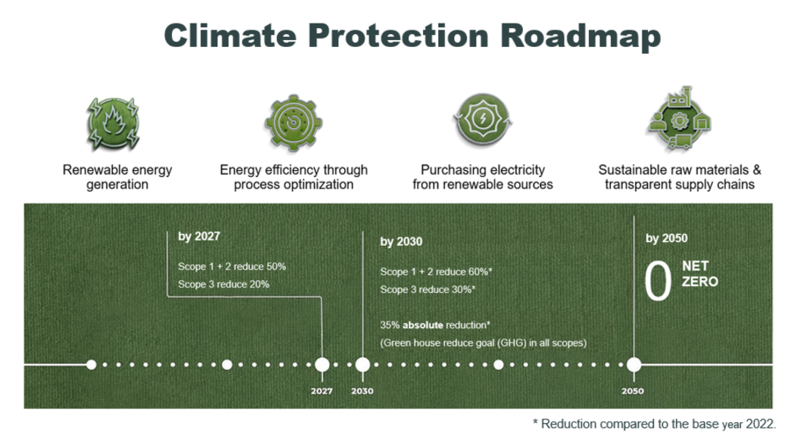
How we are reducing emissions
AMANN's climate protection roadmap combines operational improvements, renewable energy, supplier collaboration and better data quality to reduce emissions across the value chain.
Key focus areas include:
- Increasing renewable electricity at production sites
- Improving energy efficiency
- Expanding primary supplier data
- Reducing emissions from purchased raw materials
- Continuously improving Product Carbon Footprint coverage
Progress is reviewed annually and communicated transparently through our Sustainability Reports and Performance Updates.
Key Takeaway
AMANN's climate protection roadmap translates long-term climate ambitions into measurable targets and concrete actions across our operations and value chain. Achieving these goals requires continuous progress, collaboration and a clear focus on effective emission reductions.
Renewable electricity and Scope 2 emissions
Intro
Why are Scope 2 emissions reported using two different methods?
Switching to renewable electricity is an important lever for reducing greenhouse gas emissions from electricity consumption. But understanding its impact requires looking not only at how much renewable electricity is used, but also at how electricity-related emissions are measured and reported.
This is where Scope 2 comes in. Scope 2 covers indirect greenhouse gas emissions from purchased or acquired electricity, heat, steam and cooling. The GHG Protocol distinguishes between two reporting approaches: location-based and market-based.
Short definition
Scope 2 emissions are indirect greenhouse gas emissions from purchased or acquired electricity, heat, steam and cooling. This article explains how renewable electricity affects Scope 2 emissions and the difference between location-based and market-based reporting under the GHG Protocol.
Location-based vs. market-based
The two methods answer slightly different questions:
Location-based:
How emissions-intensive is the electricity grid where the energy is consumed?
The location-based method uses the average emissions intensity of the local or regional electricity grid. It therefore reflects the electricity system serving the location, regardless of the specific electricity product a company purchases.
Market-based:
What emissions are associated with the electricity a company has chosen to purchase?
The market-based method takes contractual arrangements and supplier- or product-specific information into account. Depending on the market, this can include renewable energy contracts, energy attribute certificates or other qualifying contractual instruments.
Reporting both approaches provides a more complete picture: one reflects the average emissions intensity of the electricity grid, while the other reflects the company’s contractual electricity purchases.
Why does renewable electricity matter?
Increasing the share of renewable electricity can reduce the emissions associated with purchased electricity, particularly in the market-based calculation where qualifying contractual instruments are available.
However, renewable electricity is only one part of decarbonization. Reducing energy demand and improving energy efficiency remain important because they reduce the amount of electricity that needs to be generated in the first place.
The best approach therefore combines energy efficiency with a transition towards lower-carbon energy sources.
In practice at AMANN
AMANN is increasing the share of renewable electricity across its global production network as part of its decarbonisation efforts.
Several AMANN locations already use 100% renewable electricity, while other sites are gradually transitioning. In 2025, renewable electricity accounted for 47% of electricity consumption across AMANN's sites.
The following figures provide a snapshot of AMANN's electricity mix and Scope 2 emissions, reported according to both the location-based and market-based approaches.


AMANN continues to increase renewable electricity and improve energy efficiency as part of its long-term decarbonisation strategy.
Key Takeaway
Renewable electricity can reduce market-based Scope 2 emissions, while location-based emissions reflect the carbon intensity of the local electricity grid. Understanding both approaches helps provide a more complete picture of electricity-related emissions.
How can greenhouse gas emissions be reduced?
Intro
Where do most greenhouse gas emissions actually come from?
Reducing greenhouse gas emissions requires action across the entire value chain. Depending on the emissions profile, the most important reduction levers may lie in raw materials, energy use, production processes or logistics – and often require collaboration with suppliers.
To understand where emissions come from, they are commonly grouped into Scope 1, Scope 2 and Scope 3. The three categories cover direct emissions from a company's own operations, emissions associated with purchased energy, and other indirect emissions across the wider value chain.
The graphic below shows how these emission sources differ and where they occur. This distinction also helps identify the different levers companies can use to reduce their carbon footprint – from improving their own operations and using renewable electricity to working with suppliers and choosing lower-emission materials.
Short definition
Value chain emissions are greenhouse gas emissions generated across a company's upstream and downstream activities, including raw materials, energy, production, suppliers and logistics. This article explains key levers for reducing these emissions and how better data can support effective decarbonization.

Why does this matter?
Looking at emissions across the full value chain helps companies focus their efforts where they can have the greatest impact. In many cases, reducing emissions from purchased materials, energy, suppliers or logistics can be just as important as improving a company's own operations.
Reducing emissions from raw materials
For companies that manufacture physical products, purchased goods and services can be a major source of greenhouse gas emissions. The materials used in production are often particularly important.
Choosing materials with a lower carbon footprint can therefore have a significant impact. Depending on the product, this can include recycled or bio-based materials, materials with lower-emission production processes, or more circular material solutions.
Recycled or bio-based materials can offer opportunities to reduce emissions, but their actual carbon footprint depends on the raw material, production process, energy mix and other factors.
However, material selection involves more than carbon emissions alone. Technical performance, availability, cost, regulatory requirements and end-of-life considerations also need to be taken into account.
Increasing renewable electricity
Electricity consumption is another important source of emissions, particularly where production relies on carbon-intensive electricity grids.
Increasing the share of renewable electricity can reduce Scope 2 emissions. Companies may achieve this through on-site generation, power purchase agreements, renewable electricity contracts or other procurement mechanisms, depending on their location and energy market.
The potential impact also extends to products: lower-emission electricity used during manufacturing can contribute to a lower Product Carbon Footprint.
Improving energy efficiency
Using less energy is often one of the most direct ways to reduce emissions from production.
Energy-efficiency measures can include optimizing production processes, improving insulation, reducing losses in steam and compressed-air systems, upgrading equipment and switching to more efficient lighting and machinery.
Energy efficiency and renewable electricity are complementary approaches: reducing energy demand lowers the amount of energy that needs to be supplied, while renewable energy can reduce the emissions associated with the energy that remains.
Working with suppliers
When a large share of emissions occurs upstream, companies cannot reduce their value-chain footprint alone.
Supplier engagement and better primary data can help identify where emissions occur, understand the main drivers and uncover opportunities for reduction. Depending on the industry and supply chain, this may include collecting information on energy use, production processes, materials and direct greenhouse gas emissions.
Better data can also improve the quality of both Corporate Carbon Footprints and Product Carbon Footprints.
Reducing emissions from logistics
Depending on the emissions profile, logistics can provide an additional reduction lever alongside measures in materials, sourcing and production.
The climate impact of logistics depends on factors such as transport mode, distance, load and route. In many cases, avoiding high-emission transport modes, improving transport planning and increasing efficiency can help reduce emissions.
For example, air freight generally has a much higher carbon footprint than sea, rail or road transport for comparable shipments. Logistics can therefore be an important lever alongside measures in production and sourcing.
What does this mean for customers?
The emissions associated with an AMANN thread become part of the customer's upstream value-chain emissions and ultimately contribute to the carbon footprint of the finished product. Product Carbon Footprint data can therefore help customers compare solutions, understand emission drivers and improve the carbon footprint of their own products.
Customers may therefore benefit from information about material emissions, supplier data, production processes and logistics when comparing products or working to reduce their own Scope 3 emissions and Product Carbon Footprints.
In practice at AMANN
At AMANN, purchased raw materials represent the largest source of greenhouse gas emissions. Supplier engagement and improved primary data are therefore an important part of the company's decarbonisation approach.
In 2025, an improved supplier survey strengthened the collection of primary data from raw material suppliers. In one case, more detailed data revealed significantly higher N₂O emissions than previously estimated. The resulting analysis enabled the supplier to implement reduction measures, demonstrating how better data can lead to concrete climate action.
AMANN also continuously improves its carbon accounting. The introduction of Product Carbon Footprints at brand-family level in 2025 further strengthens the connection between corporate emissions management and product-level climate data.
Using better data to drive action
Reliable data turns decarbonization into a measurable process. Corporate and Product Carbon Footprints, combined with increasingly granular supplier data, help identify hotspots, prioritize reduction measures and track progress over time. The goal is not simply to measure emissions, but to use data to reduce them.
Key Takeaway
Effective decarbonization starts with understanding where emissions occur and focusing on the areas with the greatest reduction potential. Reliable data, targeted measures and collaboration across the value chain are essential to achieving measurable emission reductions.
Sustainability reporting
Intro
Can you assess a company’s sustainability performance without reliable data?
Probably not. Sustainability goals are meaningful only when there is reliable information showing where a company stands, what it is changing and whether it is making progress.
That is where sustainability reporting comes in. It turns complex environmental and social performance into information that customers, business partners and other stakeholders can understand and use.
Short definition
Sustainability reporting is the structured disclosure of a company’s environmental, social and economic performance, targets and progress. It provides transparent, reliable information that helps stakeholders understand sustainability impacts, assess progress and make informed decisions.
What does sustainability reporting cover?
The topics covered depend on the company and its activities, but sustainability reporting typically addresses areas such as:
- Climate and energy – greenhouse gas emissions, climate targets and renewable electricity
- Resources and environment – water, waste and other environmental impacts
- Products and circularity – alternative and lower-impact materials, product innovations and circularity
- Supply chain and responsible business – responsible sourcing and social topics
- Targets and progress – objectives, measures and performance over time
Reports may also explain changes in methodologies or improvements in data quality. This provides context for the reported results and helps stakeholders understand how sustainability performance is measured.
Why does this matter?
Sustainability reporting is more than communicating numbers. It can help companies:
- Understand performance by bringing sustainability data and developments together
- Track progress against targets and identify areas for improvement
- Increase transparency for customers, partners and other stakeholders
- Support informed decisions by making relevant sustainability information easier to access
What does this mean for customers?
Sustainability information can help customers evaluate suppliers, make sourcing decisions and meet their own reporting and sustainability requirements.
Understanding how information is measured also makes it easier to assess and compare sustainability performance over time.
In practice at AMANN
AMANN publishes sustainability information to provide stakeholders with insights into its sustainability performance, targets and key developments.
We use two complementary reporting formats:
- Sustainability Report
A comprehensive publication covering AMANN's sustainability performance, targets, activities and developments in greater detail. - Sustainability Performance Update
A more focused publication highlighting key developments and progress between comprehensive Sustainability Reports.
For the 2025 reporting year, AMANN published its first Sustainability Performance Update.
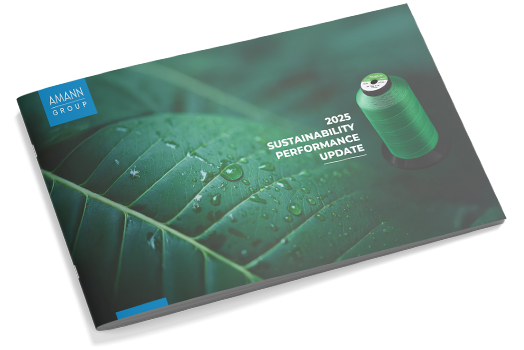
We alternate between these two formats to provide regular updates while maintaining comprehensive sustainability reporting over time.
Key Takeaway
Reliable sustainability data and transparent reporting make environmental, social and economic performance visible and understandable. They provide the foundation for tracking progress, demonstrating accountability and making informed decisions that drive continuous improvement.
Explore next
Quick facts
| Property | Value |
|---|---|
| Topic | Climate targets and decarbonization |
| Key objective | Reduce greenhouse gas emissions across company operations and the value chain |
| Emissions categories | Scope 1 (direct emissions), Scope 2 (purchased energy) and Scope 3 (other indirect value-chain emissions). |
| Key reduction levers | Renewable electricity, energy efficiency, lower-emission materials, supplier engagement and more efficient logistics |
| Carbon footprint assessment | Corporate Carbon Footprints (CCFs) and Product Carbon Footprints (PCFs) help identify emission sources and track progress |
| Climate targets | AMANN aims to reduce Scope 1, 2 and 3 emissions by at least 35% by 2030 compared with 2022 and achieve net zero emissions by 2050 |
| Reporting | AMANN communicates its sustainability performance through Sustainability Reports and Sustainability Performance Updates |
Also known as
Technical terms
- Climate protection roadmap
- Decarbonization strategy
- Greenhouse gas emissions reduction
- Carbon footprint reduction
- Scope 1, 2 and 3 emissions
- Renewable electricity procurement
- Corporate Carbon Footprint (CCF)
- Product Carbon Footprint (PCF)
- Sustainability reporting
- ESG reporting
Common descriptions
People often search for:
- Climate targets and decarbonization
- Corporate climate strategy
- Climate protection roadmap
- Greenhouse gas emissions reduction
- Corporate carbon footprint reduction
- Scope 1, Scope 2 and Scope 3 emissions
- Scope 2 emissions: location-based vs. market-based
- Renewable electricity and carbon emissions
- Corporate Carbon Footprint (CCF) and Product Carbon Footprint (PCF)
- Supply chain emissions reduction
- Supplier engagement for climate action
- Carbon footprint measurement and reporting
- Sustainability reporting and ESG disclosure
- What is decarbonization?
- How can companies reduce their carbon footprint?
- How do companies measure progress towards climate targets?
- What is the difference between a CCF and a PCF?
- How does renewable electricity reduce Scope 2 emissions?
What does sustainability reporting include?
Alternative terminology
Different industries and software providers may use slightly different terminology.
- Climate protection roadmap
- Decarbonization strategy
- Greenhouse gas emissions reduction
- Carbon footprint reduction
- Climate action
- Corporate climate strategy
- Emissions reduction targets
- Scope 1, 2 and 3 emissions
- Renewable electricity procurement
- Corporate Carbon Footprint (CCF)
- Product Carbon Footprint (PCF)
International terminology
| Language | Common terminology |
|---|---|
| English | Climate targets, Decarbonization, Greenhouse gas emissions, Carbon footprint, Sustainability reporting |
| German | Klimaziele, Dekarbonisierung, Treibhausgasemissionen, CO₂-Fußabdruck, Nachhaltigkeitsberichterstattung |
| French | Objectifs climatiques, Décarbonation, Émissions de gaz à effet de serre, Empreinte carbone, Reporting de durabilité |
| Italian | Obiettivi climatici, Decarbonizzazione, Emissioni di gas serra, Impronta di carbonio, Rendicontazione di sostenibilità |
| Spanish | Objetivos climáticos, Descarbonización, Emisiones de gases de efecto invernadero, Huella de carbono, Informes de sostenibilidad |
| Chinese | 气候目标, 脱碳, 温室气体排放, 碳足迹, 可持续发展报告 |
| Vietnamese | Mục tiêu khí hậu, Bảo vệ khí hậu, Khử carbon, Giảm phát thải khí nhà kính, Dấu chân carbon của doanh nghiệp |
FAQ
-
Climate targets define the emissions reductions a company aims to achieve within a specified timeframe. Decarbonization refers to the measures and changes implemented to reduce greenhouse gas emissions and move towards a low-carbon or net-zero future.
-
A Corporate Carbon Footprint measures the greenhouse gas emissions associated with a company's activities. It includes direct emissions from sources owned or controlled by the company (Scope 1), indirect emissions from purchased energy (Scope 2) and other indirect emissions across the value chain (Scope 3).
-
Scope 1 covers direct emissions from sources owned or controlled by a company. Scope 2 covers indirect emissions associated with purchased electricity, heat, steam and cooling. Scope 3 includes other indirect emissions across the value chain, such as emissions from purchased goods and services, transportation and business travel.
-
Companies can reduce emissions through energy efficiency, renewable electricity, improved production processes, lower-emission materials and collaboration with suppliers and other value-chain partners. The most relevant measures depend on where the largest emissions occur.
-
Generating or purchasing electricity from renewable sources can reduce the emissions associated with a company's electricity consumption and therefore its Scope 2 footprint. The actual accounting result depends on the electricity procurement arrangement and the applicable reporting method.
-
Emission figures can change when more accurate primary data becomes available, calculation methods are updated, emission factors change or historical data is recalculated. Such updates help improve the accuracy and consistency of emissions reporting and may affect comparisons with previous years.
-
Companies track progress by regularly collecting activity data, calculating greenhouse gas emissions and comparing the results with a defined baseline year. Consistent methods, transparent reporting and reliable data are essential for assessing progress towards climate targets.
-
Carbon neutrality generally refers to balancing carbon emissions through reductions and compensation measures, depending on the definition used. Net zero focuses on deep reductions in greenhouse gas emissions, with only limited residual emissions balanced by removals. The terms are not interchangeable, so the underlying criteria and boundaries should always be checked.