

Supplier engagement
Intro
A significant share of AMANN's greenhouse gas emissions is generated in our upstream value chain. Achieving our climate targets therefore depends not only on improvements within our own operations, but also on close cooperation with our suppliers.
AMANN regularly engages with suppliers to improve sustainability performance, strengthen transparency and identify opportunities for emission reductions across the value chain.
Short definition
Supplier engagement means working with suppliers to improve sustainability performance, strengthen transparency and identify opportunities for environmental and emissions reductions across the value chain. For AMANN, supplier collaboration is particularly important for understanding and reducing upstream value-chain emissions and improving the quality of sustainability data.
Working with suppliers
Our supplier collaboration includes:
- Requesting sustainability-related data from key suppliers
- Working together to improve data quality and transparency
- Identifying reduction opportunities within raw material production
- Integrating environmental criteria into procurement decisions
Through regular exchange and data collection, AMANN aims to better understand environmental impacts within its supply chain and identify where improvements can have the greatest effect.
Improving data and emissions accounting
In 2025, AMANN continued its supplier data collection activities and further improved the quality of its emissions accounting.
More detailed supplier information helps AMANN identify deviations, improve the accuracy of its Corporate Carbon Footprint (CCF) and strengthen the quality of Product Carbon Footprints (PCFs).
Supplier engagement therefore contributes not only to better collaboration, but also to more reliable sustainability data and more targeted climate action.
Sustainability as a shared responsibility
Reducing value-chain emissions and improving sustainability performance requires action across the entire supply chain.
For AMANN, working with suppliers is therefore an ongoing process based on dialogue, transparency and continuous improvement. Suppliers are important partners in building a more transparent and sustainable value chain.
Key Takeaway
Sustainability does not stop at a company's own production sites. By working closely with suppliers, you can improve transparency, strengthen emissions and sustainability data and identify opportunities to reduce environmental impacts upstream in the value chain.
Primary supplier data
Intro
Reliable sustainability data is essential for understanding environmental impacts and identifying effective reduction measures. However, not all data provides the same level of accuracy.
Whenever possible, AMANN uses primary data collected directly from suppliers instead of relying solely on generic industry averages or secondary database values.
Short definition
Supplier engagement means working with suppliers to improve sustainability performance, strengthen transparency and identify opportunities for environmental and emissions reductions across the value chain. For AMANN, supplier collaboration is particularly important for understanding and reducing upstream value-chain emissions and improving the quality of sustainability data.
Why does primary data matter?
Primary supplier data provides a more precise understanding of the actual environmental impacts associated with raw materials.
Compared with generic emission factors, supplier-specific data can better reflect factors such as:
- Actual production processes
- Energy sources and consumption
- Raw material characteristics
- Supplier-specific emission factors
- Production locations
This improves the quality and representativeness of AMANN's sustainability data.
Primary data for carbon footprints
Increasing the use of supplier-specific data supports the quality of:
- Product Carbon Footprints (PCFs)
- Corporate Carbon Footprint calculations
- Customer sustainability information
- Emission reduction strategies
In 2025, approximately 73% of emissions from key raw materials were already based on primary supplier data – an important milestone in improving the accuracy and transparency of AMANN's carbon footprint calculations.
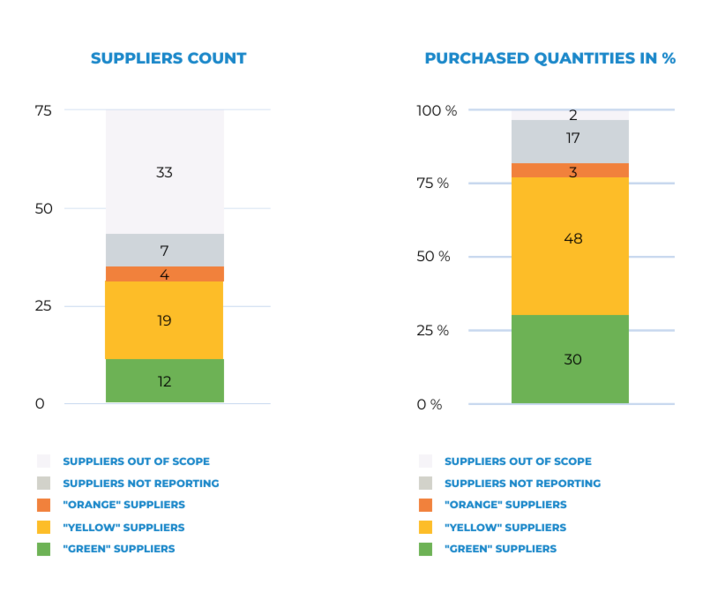
Based on the 2025 CO₂ supplier questionnaire, we systematically classified our suppliers into five categories:
- Green (PCF available)
- Yellow (no PCF, but CCF or energy data available)
- Orange (no CO₂ data, backlog in energy data collection)
- Gray (non-reporting suppliers)
- Light gray (not within the scope for 2025)
Continuously improving data quality
Primary data collection is an ongoing process. AMANN works with suppliers to increase the availability, quality and consistency of environmental information over time.
By continuously increasing the use of supplier-specific data, AMANN can better understand the environmental profile of its raw materials, identify reduction opportunities and provide customers with more reliable product-related sustainability information.
Key Takeaway
Primary supplier data makes carbon footprints more product- and supplier-specific. By working directly with suppliers, AMANN can improve data quality, transparency and the basis for targeted sustainability action.
Supply chain transparency & traceability
Intro
Transparency is becoming increasingly important in the textile industry. Customers, regulators and business partners increasingly expect better information about where materials come from, how they are produced and what environmental impacts are associated with them.
For AMANN, traceability is an important foundation for creating this visibility and strengthening responsible supply chain management.
Short definition
Supply chain transparency and traceability help companies understand where materials come from, how they move through the supply chain and what sustainability information is associated with them. Traceability focuses on following materials through the value chain, while transparency means making relevant information about the supply chain more visible and accessible.
Knowing where materials come from
Understanding the origin and characteristics of raw materials enables AMANN to better assess environmental impacts, identify potential risks and respond to increasing regulatory and customer requirements.
By working closely with suppliers, AMANN continuously improves the availability and quality of information about raw materials and their production processes.
From traceability to transparency
Supply chain transparency is supported by several activities, including:
- Collecting supplier-specific sustainability information
- Improving data availability for raw materials
- Strengthening traceability of relevant materials
- Developing product-level sustainability information
This information helps AMANN better understand its value chain and provides a stronger basis for sustainability-related decisions.
Product-level transparency
Product Carbon Footprints are one example of how supply chain information can be translated into product-level sustainability data.
Since autumn 2025, AMANN has been offering Product Carbon Footprints for its main brand families. The results provide insights into the emissions associated with raw materials, energy use and production processes, helping AMANN identify hotspots and derive targeted decarbonization measures.
For customers, this product-level transparency can support activities ranging from supplier evaluations and sustainability reporting to responsible sourcing decisions.
Preparing for future requirements
Reliable supply chain information is also becoming increasingly important as regulatory requirements evolve.
Better traceability and data availability provide an important foundation for future product-level information requirements, digital product information and increasing demands for transparent environmental data.
A more transparent supply chain creates greater visibility and trust for AMANN, its customers and partners across the textile value chain.
Key Takeaway
Traceability creates visibility; transparency makes that information usable. Together, they help AMANN better understand its value chain and support more informed sustainability decisions.
Supplier Code of Conduct & assessments
Intro
Responsible sourcing starts with knowing what responsible business practices should look like – and making these expectations clear across the supply chain.
Short definition
A Supplier Code of Conduct defines the ethical, environmental and social standards that suppliers are expected to follow when working with a company. Supplier assessments and audits help evaluate performance against these expectations, identify risks and improvement opportunities, and support responsible and resilient supply chains.
Our Supplier Code of Conduct
The Supplier Code of Conduct covers key areas such as:
- Compliance with laws and regulations
- Responsible environmental management
- Ethical business practices
- Respect for human rights and social standards
- Responsible handling of chemicals
Since 2020, all of AMANN's key strategic suppliers have signed the Code or provided evidence of their own comparable code.
Assessing supplier performance
Defining requirements is only one part of responsible sourcing. AMANN also evaluates supplier performance to identify risks, improvement opportunities and areas where closer collaboration is needed.
Supplier assessments and audits help AMANN:
- Identify potential sustainability risks
- Evaluate compliance with defined requirements
- Track improvement opportunities
- Strengthen dialogue and collaboration with suppliers
In 2024, AMANN conducted compliance audits at suppliers in India and Vietnam. Previously agreed improvement actions from supplier audits were also reviewed to monitor progress.
Working towards continuous improvement
AMANN's approach to supplier management is based on partnership. Suppliers are expected to meet defined requirements, while AMANN also works with them to identify opportunities for improvement.
Through clear expectations, regular assessments and ongoing dialogue, AMANN aims to strengthen sustainability performance and build more responsible and resilient supply chains.
Key Takeaway
Clear expectations create the foundation for responsible sourcing. Through its Supplier Code of Conduct, assessments, audits and ongoing dialogue, AMANN works with suppliers to identify risks, monitor progress and support continuous improvement.
Explore next
Curious to learn more?
→ Which sustainability regulations exist?
Quick facts
| Property | Value |
|---|---|
| Category | Responsible sourcing and sustainable supply chain management |
| Main purpose | Improve sustainability performance, transparency and accountability across the supply chain |
| Key areas | Supplier engagement, primary data, traceability and supplier assessments |
| Environmental focus | Greenhouse gas emissions, raw materials and environmental impacts |
| Social focus | Human rights, social standards and ethical business practices |
| Key instruments | Supplier Code of Conduct, supplier assessments, audits and sustainability data collection |
| Carbon accounting | Corporate Carbon Footprint (CCF) and Product Carbon Footprint (PCF) |
| Core principle | Collaboration, transparency and continuous improvement |
| Related topics | Sustainable procurement, supply chain due diligence, supplier sustainability and decarbonization |
Also known as
Technical terms
- Responsible sourcing
- Sustainable sourcing
- Sustainable supply chain management
- Responsible procurement
- Supplier sustainability management
- Supply chain transparency and traceability
- Supplier due diligence
Sustainable supplier management
Common descriptions
People often search for:
- What is responsible sourcing?
- What is sustainable sourcing in the textile industry?
- How can companies improve supply chain sustainability?
- How do companies assess supplier sustainability?
- What is the role of suppliers in sustainability?
- How can companies ensure responsible sourcing?
- How can businesses improve supply chain transparency?
- What is supplier due diligence?
- How can companies reduce supply chain emissions?
- What is a Supplier Code of Conduct?
- How can companies track the origin of raw materials?
- What sustainability criteria should suppliers meet?
How can companies monitor environmental and social risks in their supply chains?
Alternative terminology
Different industries and software providers may use slightly different terminology.
- Ethical sourcing
- Sustainable procurement
- Supplier engagement
- Supplier sustainability assessments
- Supply chain risk management
- Supplier compliance
- Responsible supply chain management
- Environmental and social due diligence
International terminology
| Language | Common terminology |
|---|---|
| English | Responsible sourcing, Sustainable sourcing, Sustainable supply chain management |
| German | Verantwortungsvolle Beschaffung, Nachhaltige Beschaffung, Nachhaltiges Lieferkettenmanagement |
| French | Approvisionnement responsable, Approvisionnement durable, Gestion durable de la chaîne d'approvisionnement |
| Italian | Approvvigionamento responsabile, Approvvigionamento sostenibile, Gestione sostenibile della catena di approvvigionamento |
| Spanish | Abastecimiento responsable, Abastecimiento sostenible, Gestión sostenible de la cadena de suministro |
| Chinese | 负责任采购, 可持续采购, 可持续供应链管理 |
| Vietnamese | Thu mua có trách nhiệm, Thu mua bền vững, Quản lý chuỗi cung ứng bền vững |
FAQ
-
Responsible sourcing is the practice of considering environmental, social and ethical factors when selecting and working with suppliers. It helps companies understand supply chain impacts, identify risks and promote more sustainable business practices.
-
Textile supply chains involve multiple suppliers, raw materials and production processes. Responsible sourcing helps companies improve transparency, assess environmental and social risks and make more informed purchasing decisions.
-
Companies can engage with suppliers, collect reliable sustainability data, improve material traceability, establish clear supplier requirements and conduct assessments and audits to identify risks and opportunities for improvement.
-
Suppliers provide essential information about raw material origins, production processes, energy consumption and environmental and social practices. Collaboration with suppliers helps companies better understand and improve their supply chain performance.
-
A Supplier Code of Conduct defines the environmental, social and ethical standards suppliers are expected to follow. It commonly addresses legal compliance, human rights, environmental management, business ethics and responsible chemical handling.
-
Supplier assessments and audits help companies evaluate compliance with defined requirements, identify potential sustainability risks and monitor improvement opportunities. Follow-up activities support continuous improvement.
-
Traceability helps companies track materials through the supply chain, while transparency makes relevant information about suppliers, material origins and production processes more visible. Together, they support better-informed sourcing decisions.
-
Primary supplier data provides information directly from suppliers about their materials, production processes, energy use and emissions. This can improve carbon footprint calculations, strengthen transparency and help companies identify opportunities to reduce environmental impacts.