
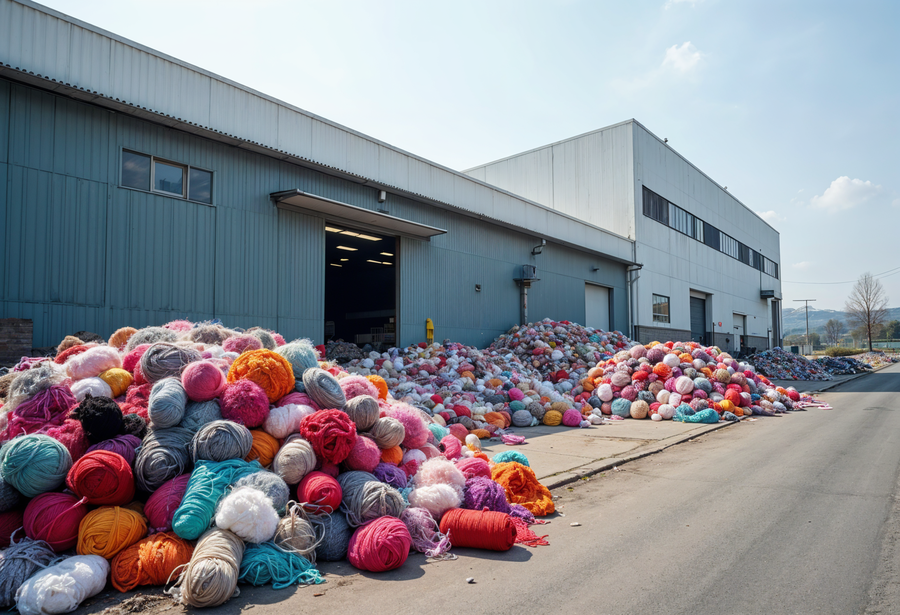
Recycled materials
Intro
Recycled materials are an important pathway towards a more circular textile industry. Today, choosing recycled sewing threads does not require compromising on quality or performance.
AMANN's Recycled portfolio combines recycled raw materials with the technical reliability customers expect from high-performance sewing and embroidery threads.
Short definition
Recycled materials are materials made from recovered resources that are processed and used again instead of relying entirely on newly extracted or produced raw materials. In sewing and embroidery threads, recycled materials can help reduce the use of virgin resources while maintaining the technical performance required for demanding textile applications.
Recycled vs. virgin materials
The main difference between recycled and conventional products lies in the raw material source.
Virgin materials are produced from newly extracted resources, while recycled threads use high-quality recycled feedstocks, such as recycled polyester.
By replacing virgin raw materials, recycled threads can help:
- Reduce dependence on fossil resources
- Support circular material flows
- Lower the environmental impact of products
AMANN's recycled products are designed to provide comparable performance regarding:
- Tensile and seam strength
- Abrasion resistance
- Sewability
- Colour fastness
Mechanical and chemical recycling
Different recycling technologies influence the quality and applications of recycled materials.
Mechanical recycling physically processes existing materials through steps such as shredding, melting and reprocessing. It is widely established but can affect material properties after repeated recycling cycles.
Chemical recycling breaks materials down into their molecular building blocks, enabling recycled materials with properties closer to virgin materials. It offers potential for more advanced circular applications.
Both approaches play an important role in developing future circular textile systems.
AMANN Recycled product portfolio
AMANN offers a broad range of recycled sewing and embroidery threads for different applications, including apparel, home textiles, leather goods, footwear and technical textiles.
Examples include:
Sewing threads
- Saba Recycled
- Universal Recycled
- Sabatex Recycled
- Sabaflex Recycled
- Serafil Recycled
- Serafil fine Recycled
- Strongcore Recycled
Embroidery threads
- Isacord Recycled
- Isacord Recycled UV
These are just some examples from AMANN's recycled portfolio. Explore the AMANN Product Finder to discover the full range of recycled sewing and embroidery threads and find the right product for your application.
Key Takeaway
Recycled materials can help reduce the use of virgin resources while supporting high-performance textile applications. Mechanical and chemical recycling offer different pathways for turning recovered materials into new feedstocks, and recycled sewing and embroidery threads can be used across a wide range of applications.
Biobased materials
1. Cellulosic fibres and AeoniQ™ Fil
Intro
Cellulosic fibres are fibres produced from renewable plant-based feedstocks, such as wood pulp. Unlike conventional fossil-based synthetic fibres, they are based on renewable carbon sources and can support the development of alternative and potentially more circular material systems.
Advances in fibre technology are enabling new generations of cellulosic materials with improved strength, durability and application performance. This creates opportunities for textile applications that traditionally rely on fossil-based synthetic fibres.
For AMANN, cellulosic fibres represent an important area of material innovation. One example is AeoniQ™ Fil, a next-generation sewing and embroidery thread based on regenerative cellulosic fibres from renewable wood pulp.
Short definition
Cellulosic fibres are fibres made from cellulose, a natural polymer derived from renewable plant-based sources such as wood. They can provide an alternative to fossil-based synthetic fibres, while their overall environmental and circularity benefits depend on factors such as feedstock, production process, product design and end-of-life.
AeoniQ™ Fil: a cellulosic thread solution
AeoniQ™ Fil represents a new generation of sewing and embroidery threads based on regenerative cellulosic fibres made from renewable wood pulp.
The thread is designed to combine the performance requirements of demanding sewing and embroidery applications with the potential sustainability benefits of next-generation cellulose-based materials.
AMANN became the strategic industrial production partner for AeoniQ™ and is responsible for bringing AeoniQ™ Fil to the textile market. AeoniQ™ Fil by AMANN was launched in 2026 as a biodegradable high-performance sewing and embroidery thread designed for circular textile concepts.
Potential for circular textile concepts
Cellulosic fibres can contribute to future circular textile concepts, particularly when combined with suitable product design, mono-material approaches and appropriate end-of-life solutions.
At the same time, bio-based does not automatically mean circular or biodegradable. The overall environmental performance of a material depends on its complete lifecycle, including raw material sourcing, production, use and end-of-life.
For AMANN, cellulosic fibres are therefore one part of a broader approach to exploring renewable and innovative materials for future sewing and embroidery thread solutions.
Key Takeaway
Cellulosic fibres provide a renewable, non-fossil-based pathway for textile materials. Technologies such as AeoniQ™ Fil demonstrate how cellulose-based materials can be developed for demanding sewing and embroidery applications. At the same time, bio-based sourcing alone does not make a product automatically circular or more sustainable – the entire lifecycle needs to be considered.
2. Biobased polymers: exploring future materials
Intro
The textile industry is exploring new material solutions to reduce dependence on fossil resources while maintaining the high performance requirements of modern textile applications.
Biobased polymers are one area of this innovation. They can be derived fully or partially from renewable resources and may offer new opportunities for reducing dependence on fossil-based feedstocks.
Short definition
Biobased polymers are polymers made fully or partially from renewable biological resources such as plant-based feedstocks, cellulose or castor oil. They can offer alternatives to fossil-based raw materials, but their sustainability and suitability for textile applications depend on the specific material, production process, technical performance and end-of-life pathway.
What are examples of biobased polymers?
Examples include:
- Polylactic Acid (PLA)
- Biobased polyamides, such as PA11 and PA5.10
- Cellulose-based materials
Depending on the material and production process, biobased polymers can offer potential sustainability benefits such as:
- Use of renewable raw materials
- Reduced dependence on fossil resources
- Potentially lower carbon footprints compared with conventional polymers
- New opportunities for circular material concepts
However, biobased does not automatically mean biodegradable. Similarly, not every biobased polymer provides the technical properties required for demanding textile applications.
Why is AMANN investigating biobased polymers?
As a manufacturer of high-performance sewing and embroidery threads, AMANN continuously evaluates emerging materials and technologies that could contribute to more sustainable textile solutions.
The key challenge is to combine potential sustainability benefits with the technical requirements customers expect, including:
- High tensile strength
- Durability
- Reliable sewing performance
- Processability and product safety
AMANN is currently investigating selected biobased polymers and innovative material solutions to better understand their potential for future sewing thread applications.
Looking towards future materials
Biobased polymers are not yet a universal replacement for conventional sewing thread materials. Their suitability depends on the specific material, application and overall lifecycle.
By exploring emerging materials today, AMANN aims to better understand their potential and support the development of future sewing and embroidery thread solutions.
Key Takeaway
Biobased polymers could offer new pathways away from fossil-based feedstocks – but renewable origin alone does not make a material automatically sustainable or suitable for textile applications. AMANN is exploring emerging polymer technologies to understand where they can combine meaningful sustainability potential with the high performance required from sewing and embroidery threads.
Explore next
Curious to learn more?
Quick facts
| Property | Value |
|---|---|
| Topic | Sustainable Materials |
| Main material pathways | Recycled materials, cellulosic fibres and biobased polymers |
| Key objective | Reducing dependence on virgin resources and fossil-based feedstocks |
| Recycled materials | Made from recovered resources that are processed and used again |
| Recycling technologies | Mechanical recycling and chemical recycling |
| Biobased materials | Derived fully or partially from renewable biological resources |
| Cellulosic fibres | Made from cellulose derived from sources such as renewable wood pulp |
| Key AMANN innovation | AeoniQ™ Fil, a biodegradable high-performance sewing and embroidery thread |
| Key consideration | Material origin alone does not determine sustainability; performance, production and end-of-life also matter |
Also known as
Technical terms
- Sustainable materials
- Recycled materials
- Recycled fibres
- Recycled polyester
- Virgin materials
- Virgin raw materials
- Mechanical recycling
- Chemical recycling
- Biobased materials
- Biobased polymers
- Bio-based polymers
- Cellulosic fibres
- Cellulose-based materials
- Renewable feedstocks
- Fossil-based feedstocks
- Biodegradable materials
- Circular materials
Sustainable textile materials
Common descriptions
People often search for:
- What are sustainable materials?
- What are recycled materials?
- What is the difference between recycled and virgin materials?
- What is the difference between mechanical and chemical recycling?
- What are biobased materials?
- What are biobased polymers?
- What are cellulosic fibres?
- Are biobased materials biodegradable?
- What is the difference between biobased and biodegradable materials?
- What are the benefits of recycled polyester?
- Can recycled sewing threads perform as well as conventional threads?
- What is AeoniQ™ Fil?
- Which sustainable materials are used in sewing and embroidery threads?
How can textile manufacturers reduce their use of fossil-based materials?
Alternative terminology
Different industries and software providers may use slightly different terminology.
- Sustainable raw materials
- Alternative raw materials
- Recycled feedstocks
- Secondary raw materials
- Recycled textile materials
- Recycled-content materials
- Bio-based raw materials
- Renewable materials
- Plant-based materials
- Cellulose-based fibres
- Next-generation materials
- Innovative textile materials
- Low-fossil materials
- Circular material solutions
- Sustainable fibre technologies
- Recycled sewing thread
- Bio-based polymers
- Biodegradable textile materials
International terminology
| Language | Common terminology |
|---|---|
| English | Sustainable materials; recycled materials; biobased materials; cellulosic fibres; biobased polymers |
| German | Nachhaltige Materialien; recycelte Materialien; biobasierte Materialien; Cellulosefasern; biobasierte Polymere |
| French | Matériaux durables; matériaux recyclés; matériaux biosourcés; fibres cellulosiques; polymères biosourcés |
| Italian | Materiali sostenibili; materiali riciclati; materiali biobased / di origine biologica; fibre cellulosiche; polimeri biobased |
| Spanish | Materiales sostenibles; materiales reciclados; materiales de origen biológico; fibras celulósicas; polímeros de origen biológico |
| Chinese | 可持续材料; 再生材料; 生物基材料; 纤维素纤维; 生物基聚合物 |
| Vietnamese | Vật liệu bền vững; vật liệu tái chế; vật liệu có nguồn gốc sinh học; sợi cellulose; polyme có nguồn gốc sinh học |
FAQ
-
Sustainable materials are materials selected to reduce environmental impacts while meeting the technical and functional requirements of an application. Their suitability depends on factors such as raw material source, production, performance and end-of-life.
-
Virgin materials are produced from newly extracted or sourced resources, while recycled materials use recovered resources that are processed and used again.
-
Mechanical recycling physically processes existing materials, while chemical recycling breaks materials down into their molecular building blocks. Both approaches can contribute to circular material systems.
-
Biobased materials are made fully or partially from renewable biological resources, such as plant-based feedstocks, cellulose or castor oil.
-
No. Biobased describes the origin of a material, while biodegradability describes its ability to break down under suitable conditions. The two properties are not interchangeable.
-
Cellulosic fibres are made from cellulose, a natural polymer found in plant-based resources such as wood. They can offer an alternative to conventional fossil-based synthetic fibres.
-
AeoniQ™ Fil is a biodegradable high-performance sewing and embroidery thread based on regenerative cellulosic fibres from renewable wood pulp. AMANN launched the product in 2026.
-
Yes. AMANN's Recycled portfolio is designed to provide the technical reliability required for demanding textile applications, including strength, abrasion resistance, sewability and colour fastness.