AMANN's water roadmap
Intro
Water is one of the world's most valuable resources – and one of the most complex sustainability topics facing the textile industry. Unlike carbon emissions, where globally recognized standards and methodologies provide a common framework for measuring impacts and setting reduction targets, the environmental significance of water use depends strongly on where water is used and under which local conditions.
At AMANN, responsible water management therefore means more than simply reducing consumption. It means understanding local water challenges, reducing freshwater demand, keeping water in circulation for as long as possible and contributing to responsible water stewardship across our global operations.
To support this ambition, AMANN launched a cross-site Water Roadmap in 2025. It provides a structured framework for measuring, managing and continuously improving water performance across our global operations.
Our approach: Reduce, Reuse, Recycle
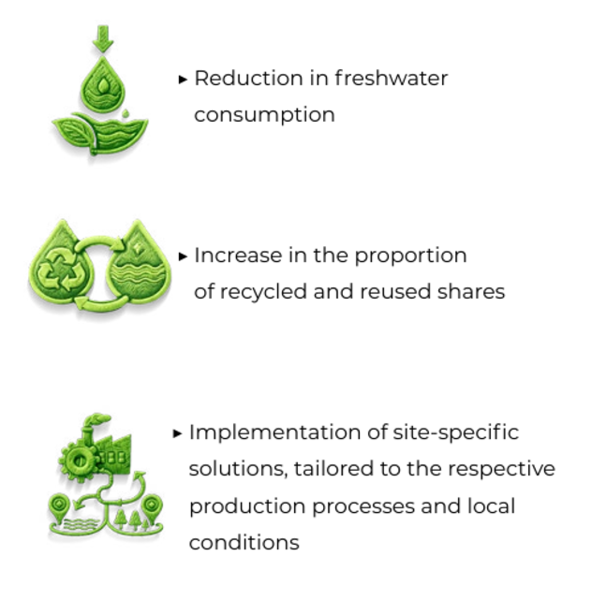
The Water Roadmap is built around three principles:
- Reduce water consumption wherever possible
- Reuse water within production processes
- Recycle water through appropriate treatment technologies
Together, these principles help AMANN reduce freshwater demand and increase the amount of water kept in circulation.
Targets and performance
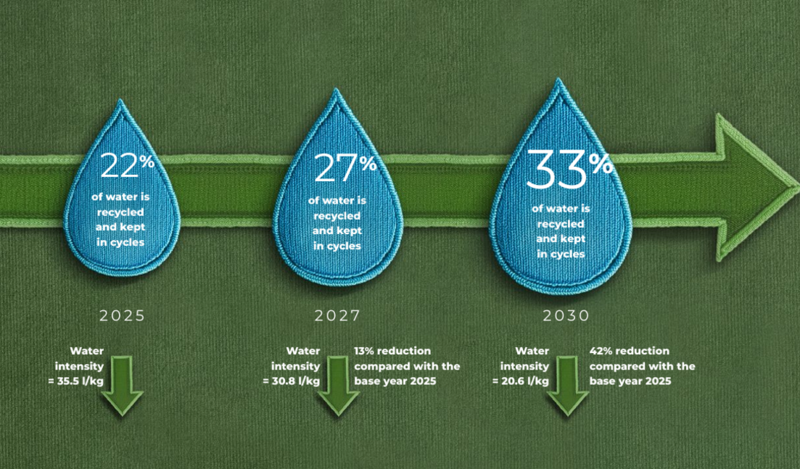
Using 2025 as the baseline year, the Water Roadmap sets measurable targets through 2030, including reducing water intensity and increasing the share of recycled and reused water.
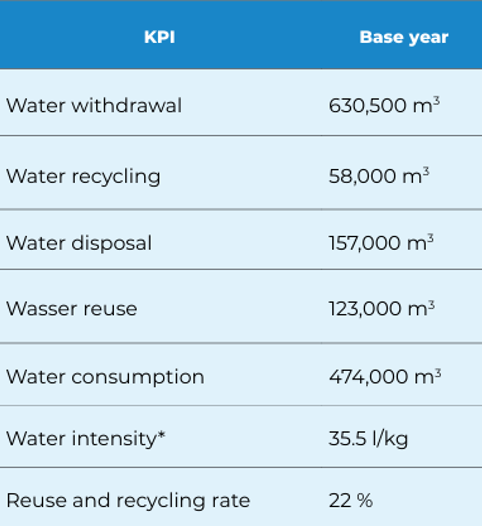
AMANN's key water performance indicators include:
- Water intensity
- Share of recycled and reused water
- Total water withdrawal and consumption
These KPIs enable AMANN to track progress consistently, identify opportunities for improvement and measure the effectiveness of implemented initiatives.
Global targets, local implementation
Water challenges differ significantly between regions and production sites. AMANN therefore combines global targets with site-specific measures and technologies that reflect local water conditions, production processes and environmental requirements.
This approach allows AMANN to address water management where it can have the greatest impact while continuously improving performance across the global production network.
By combining measurable targets, local risk assessments and practical improvement measures, AMANN is working towards a more circular approach to water management and greater long-term resource resilience.
Sustainable water management: reduce, reuse, recycle
Intro
Reducing water consumption is only one part of responsible water management. Equally important is making the best possible use of the water that has already been withdrawn.
At AMANN, our approach follows the principle of Reduce, Reuse, Recycle. We continuously work to reduce freshwater demand, optimize production processes and keep water in circulation for as long as possible.
Short definition
Sustainable water management means reducing freshwater demand, using water efficiently and keeping water in circulation wherever possible. In manufacturing, this can include water reduction, direct reuse, wastewater recycling and advanced treatment technologies such as Reverse Osmosis (RO) and Zero Liquid Discharge (ZLD).
Reuse or recycle: What's the difference?
The terms reuse and recycling describe two different approaches to keeping water in circulation:
- Reuse means that water is used multiple times within the production process or elsewhere on site without undergoing treatment.
- Recycling means that wastewater is treated before being returned to the production process or reused elsewhere on site.
Whenever possible, AMANN prioritizes direct reuse. Where this is not feasible, appropriate treatment technologies enable water to be recycled and returned safely to the production cycle.
Both approaches help reduce freshwater withdrawal and support a more circular use of water resources.
How wastewater becomes reusable water
Before wastewater can be reused, it must be treated to remove contaminants and recover as much clean water as possible.
There is no single technology that can achieve this in every situation. Depending on the site, water quality requirements and local conditions, several treatment technologies can be used individually or combined into more advanced systems.
A typical advanced treatment process can include:
- Pre-treatment – removing fibres, particles and other impurities
- Membrane filtration – separating clean water from dissolved substances using technologies such as Reverse Osmosis (RO)
- Evaporation – recovering additional water from concentrated wastewater
- Crystallization – converting remaining residues into solid waste for safe disposal or potential recovery
Reverse Osmosis
Reverse Osmosis (RO) is a membrane filtration technology that removes dissolved salts and other contaminants from water. It can produce water that is suitable for reuse in production.
Zero Liquid Discharge
For sites aiming to recover even more water, RO can form part of a Zero Liquid Discharge (ZLD) system. ZLD builds on membrane treatment by adding further treatment stages, such as evaporation and crystallization, to recover additional water and minimize liquid discharge.
Understanding a Zero Liquid Discharge system becomes much easier when you can actually see the transformation taking place.

The above image shows the journey of water through our ZLD system:
- On the left, highly contaminated wastewater (what enters the system)
- Step by step, it gets treated and clarified
- In the middle, you suddenly see clear water again (this is the part that can be reused)
- And on the right, what’s left: concentrated residues and salts
Site-specific water management
AMANN applies different water management solutions across its production network, depending on local conditions, production processes and environmental requirements.
Rather than applying one solution across all locations, AMANN evaluates the specific conditions and requirements of each site to identify suitable measures. This site-specific approach is an important part of our water roadmap and supports AMANN's ambition to move towards more efficient and responsible water use.
Key Takeaway
Sustainable water management is about more than reducing water consumption. By following the principle Reduce, Reuse, Recycle, manufacturers can lower freshwater demand, keep water in circulation and recover water from wastewater. Technologies such as Reverse Osmosis and Zero Liquid Discharge can support this approach where appropriate.
Explore next
Curious to learn more?
→ How does AMANN’s water roadmap work?
→ How do we manage water risk?
→ How does sustainable manufacturing support circularity?
Water risk management
Intro
Water management is about more than how much water a company uses. The environmental impact of water use also depends on where that water is withdrawn and the availability of freshwater resources in the surrounding area.
While some AMANN production sites operate in regions with relatively abundant freshwater resources, others are located in areas facing higher levels of water stress. Understanding these regional differences helps AMANN prioritize measures where water-related risks are greatest.
Short definition
Water risk management means identifying and assessing water-related risks at specific locations and using this information to prioritize appropriate water management measures. AMANN assesses local water risks across its production network using the World Resources Institute (WRI) Aqueduct methodology to understand where water stress and other water-related challenges may require greater attention.
Assessing water risks across our global network
AMANN regularly assesses water risks across its production sites using the World Resources Institute (WRI) Aqueduct methodology.
One of the indicators used is Baseline Water Stress, which assesses the relationship between local water demand and available freshwater resources. This helps identify locations where water scarcity may pose a greater environmental and operational risk.
Water risks are continuously monitored. If significant changes in local water risks occur, the affected sites are expected to report them, allowing AMANN to assess potential impacts and respond where necessary.
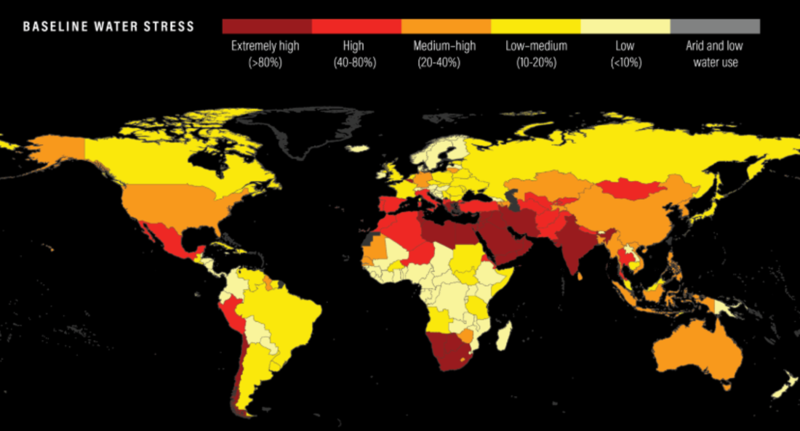
From global targets to local priorities
Water risks and challenges vary between locations. A measure that is highly effective in one region may be less relevant in another.
By combining global water targets with site-specific risk assessments, AMANN can tailor its water management approach to local conditions. This helps determine where investments in water-saving measures, reuse systems or advanced treatment technologies can have the greatest impact.
The risk-based approach complements AMANN's Water Roadmap by connecting global ambitions with local environmental realities.
Why location matters
Considering both how much water is used and where it is used allows AMANN to take a more comprehensive approach to water stewardship.
For customers, this means partnering with a company that considers the local environmental context when managing water resources across its global operations. By identifying water risks and prioritizing action accordingly, AMANN aims to strengthen the resilience of its production network while contributing to responsible water management.
Key Takeaway
Water risk depends on both how much water is used and where it is used. By assessing local water conditions and water stress, AMANN can identify where water-related risks are greater and tailor its water management measures accordingly. This risk-based approach connects global water ambitions with the environmental realities of individual production sites.
Explore next
Curious to learn more?
→ Sustainable water management: reduce, reuse, recycle
→ AMANN's water roadmap
→ Resource-efficient processes
Quick facts
| Property | Value |
|---|---|
| Topic | Water stewardship |
| Main framework | AMANN's Water Roadmap |
| Baseline year | 2025 |
| Key principle | Reduce, Reuse, Recycle |
| Main KPIs | Water intensity, recycled and reused water, total water withdrawal and consumption |
| Key technologies | Reverse Osmosis (RO) and Zero Liquid Discharge (ZLD) |
| Water risk assessment | World Resources Institute (WRI) Aqueduct methodology |
| Key risk indicator | Baseline Water Stress |
| Implementation approach | Global targets with site-specific measures |
| Main objective | Reducing freshwater demand and keeping water in circulation |
Also known as
Technical terms
- Water stewardship
- Sustainable water management
- Water efficiency
- Water consumption
- Water withdrawal
- Water intensity
- Water reuse
- Wastewater recycling
- Wastewater treatment
- Freshwater demand
- Water stress
- Water scarcity
- Water risk assessment
- Reverse Osmosis (RO)
- Zero Liquid Discharge (ZLD)
- WRI Aqueduct
Baseline Water Stress
Common descriptions
People often search for:
- What is water stewardship?
- What is sustainable water management?
- What is the difference between water reuse and water recycling?
- How can manufacturers reduce water consumption?
- What is water intensity?
- What is water stress?
- How can companies assess water-related risks?
- What is Reverse Osmosis (RO)?
- What is Zero Liquid Discharge (ZLD)?
- How does wastewater recycling work?
- How can textile manufacturers reduce freshwater use?
- How does AMANN manage water across its production sites?
- What is the WRI Aqueduct methodology?
Why does location matter for water management?
Alternative terminology
Different industries and software providers may use slightly different terminology.
- Responsible water management
- Water resource management
- Water conservation
- Water reduction
- Water efficiency measures
- Water reuse systems
- Water recovery
- Industrial wastewater treatment
- Wastewater recovery
- Water recycling systems
- Water risk management
- Water risk screening
- Water stress assessment
- Water resource resilience
- Site-specific water management
- Circular water management
- Water stewardship strategy
International terminology
| Language | Common terminology |
|---|---|
| English | Water stewardship; sustainable water management; water reuse; wastewater recycling; water stress; water risk management |
| German | Verantwortungsvolle Wasserbewirtschaftung; nachhaltiges Wassermanagement; Wasserwiederverwendung; Abwasserrecycling; Wasserstress; Wasserrisikomanagement |
| French | Gestion responsable de l’eau; gestion durable de l’eau; réutilisation de l’eau; recyclage des eaux usées; stress hydrique; gestion des risques liés à l’eau |
| Italian | Gestione responsabile dell’acqua; gestione sostenibile dell’acqua; riutilizzo dell’acqua; riciclo delle acque reflue; stress idrico; gestione dei rischi idrici |
| Spanish | Gestión responsable del agua; gestión sostenible del agua; reutilización del agua; reciclaje de aguas residuales; estrés hídrico; gestión de riesgos relacionados con el agua |
| Chinese | 水资源管理; 可持续水管理; 水资源再利用; 废水回收利用; 水资源压力; 水风险管理 |
| Vietnamese | Quản lý tài nguyên nước có trách nhiệm; quản lý nước bền vững; tái sử dụng nước; tái chế nước thải; căng thẳng nguồn nước; quản lý rủi ro về nước |
FAQ
-
Water stewardship means managing water resources responsibly by considering water use, local environmental conditions and water-related risks. It goes beyond simply reducing consumption.
-
Launched in 2025, AMANN's Water Roadmap provides a cross-site framework for measuring, managing and continuously improving water performance across its global operations.
-
Reduce means lowering water consumption, reuse means using water again without treatment, and recycle means treating wastewater before returning it to use.
-
Water intensity measures water use in relation to an activity or output. AMANN uses it as one of its key indicators to monitor water performance.
-
Water stress describes pressure on available water resources relative to demand and other local conditions. Water scarcity refers more specifically to insufficient available water to meet needs.
-
Reverse Osmosis is a membrane filtration technology that removes dissolved salts and other contaminants from water, potentially making it suitable for reuse in production.
-
Zero Liquid Discharge is a water treatment approach designed to recover water from wastewater and minimize liquid discharge. It can combine Reverse Osmosis with further treatment stages, such as evaporation and crystallization.
-
AMANN uses the World Resources Institute (WRI) Aqueduct methodology to assess water risks across its production sites. Indicators such as Baseline Water Stress help identify locations where water-related challenges may require greater attention.