Intro
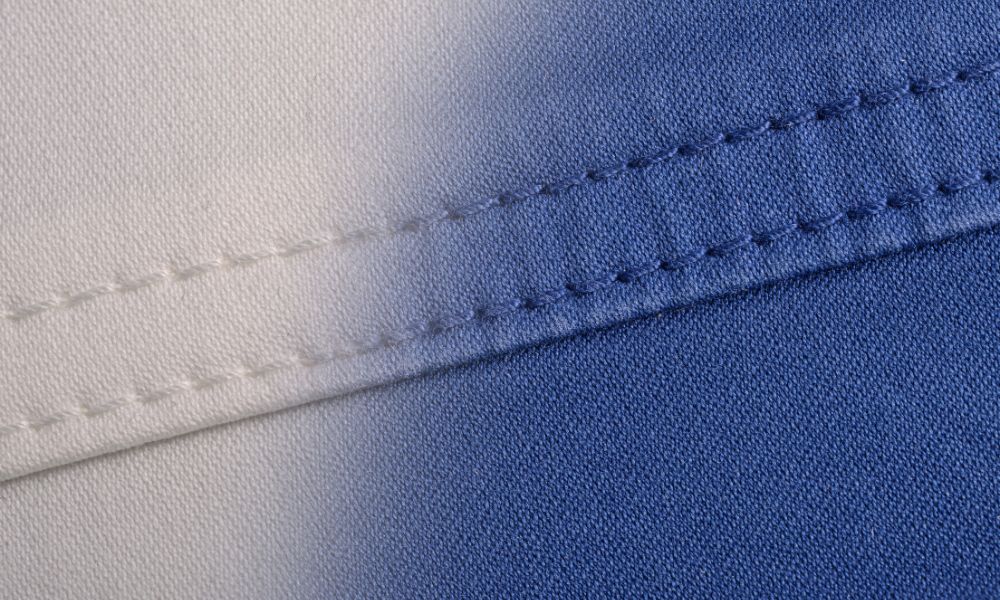
In garment dyeing, the product is assembled before it is dyed. The sewing thread must therefore respond to the dyeing process in a way that supports the intended final appearance. If the thread does not absorb the same dye class as the fabric, the seam may remain visible or develop an unwanted colour contrast.
The right solution depends on the fabric fibre, dye class, pre-treatment, process temperature, desired shade, seam strength and elasticity. Cotton offers excellent dye affinity for cellulose-based dyeing systems, while a core spun construction can provide increased seam strength and elongation.
Why one thread may not be suitable for every seam
A garment-dyed product may contain closing seams, topstitching, buttonholes, overedging and decorative details. These seam positions can require different combinations of dyeability, strength, appearance and elasticity. A coordinated thread concept may therefore use more than one product.
Key factors to consider
- Fabric composition: Cotton, viscose and other cellulosic fabrics normally require different dye systems from polyester or polyamide.
- Dye class and process: The thread must be compatible with the selected dyestuffs, temperature and process conditions.
- Desired appearance: Define whether a tone-on-tone result, a controlled contrast or a natural variation is intended.
- Seam performance: Pure cotton provides excellent dye affinity, while core spun constructions can offer higher seam strength and elongation.
- Testing: Shade and performance must be validated in the actual dyeing process because pre-treatment and process conditions can influence the result.
Typical applications
- Garment-dyed jeans
- Casualwear and shirts
- Sweatshirts and jersey products
- Children’s clothing
- Fashion products with tone-on-tone seams
- Dyed embroidery and decorative details
Find the right AMANN solution
| AMANN product | Recommended use within this solution |
|---|---|
| MercifilGD | Long-staple mercerised cotton sewing thread with optimal dyeing properties for garment dyeing. |
| RasantGD | Dyeable core spun thread made from 40% polyester and 60% cotton, combining improved dyeability with increased seam strength and elongation. |
Important technical note
The suitability of a sewing thread depends on the complete combination of material, seam construction, stitch type, needle, machine settings and finishing processes. Individual sewing trials and application-specific testing are recommended before production.