
Intro
Conductive and antistatic textiles serve different purposes. Conductive threads carry electrical signals or create functional textile structures such as electrodes, sensors and actuators. Antistatic threads help dissipate electrostatic charges and reduce charge accumulation in protective or cleanroom garments.
The correct solution depends on the required electrical resistance, current load, stitch design, contact points, wash durability and interaction with other conductive components. A conductive thread should not automatically be treated as an antistatic safety solution, and an antistatic thread is not necessarily suitable for signal transmission.
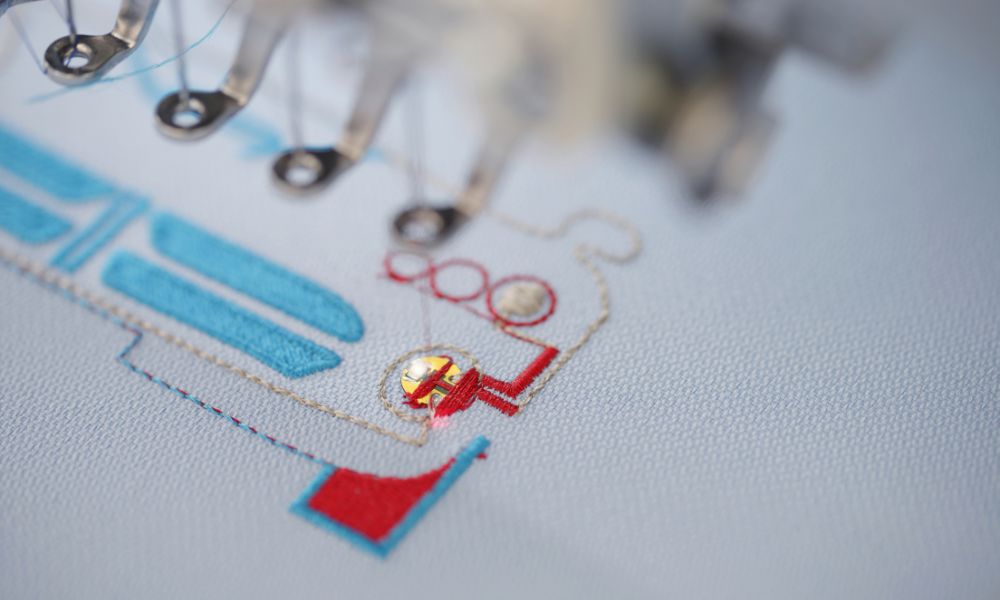
Conductive and antistatic are not interchangeable
Electrical conductivity is used to create circuits, contacts and functional surfaces. Antistatic behaviour focuses on controlled charge dissipation. The thread, stitch geometry and connection design must therefore be selected according to the intended electrical function.
Key factors to consider
- Electrical requirement: Define whether the thread must transmit a signal, form an electrode or dissipate static charge.
- Resistance: The required resistance per metre and the total resistance of the stitched path must be considered.
- Stitch geometry: Stitch length, density, overlaps and contact areas influence the electrical result.
- Connections: Transitions to electronics, sensors, snaps or conductive fabrics must be mechanically and electrically reliable.
- Care and ageing: Washing, abrasion, oxidation and flexing can change electrical performance over time.
- Safety validation: Protective and medical applications require validation of the complete system, not only the thread.
Typical applications
- Textile electrodes
- Wearable sensors and actuators
- Smart garments
- Medical and rehabilitation textiles
- Cleanroom garments
- Protective clothing requiring charge dissipation
- Conductive embroidery and stitched circuits
Find the right AMANN solution
| AMANN product | Recommended use within this solution |
|---|---|
| Silver-tech | Silver-coated hybrid sewing and embroidery thread for conductive seams, surfaces, textile electrodes, sensors and actuators. |
| C-tech | Hybrid thread with a carbon component for dissipating electrical and static charges in cleanroom and protective clothing. |
Important technical note
Electrical performance depends on the complete stitched design, contacts, materials and care process. System-level testing is required, especially in protective and medical applications.