
Intro
Chemical exposure can cause swelling, embrittlement, strength loss, surface damage or premature failure in conventional sewing threads. The correct raw material must therefore be selected according to the specific acids, bases, solvents, temperatures, concentrations and exposure times involved.
There is no universal chemical-resistant thread. Polypropylene, PEEK and ePTFE each provide different resistance profiles. Mechanical wear, temperature and seam load must be assessed together with chemical compatibility.
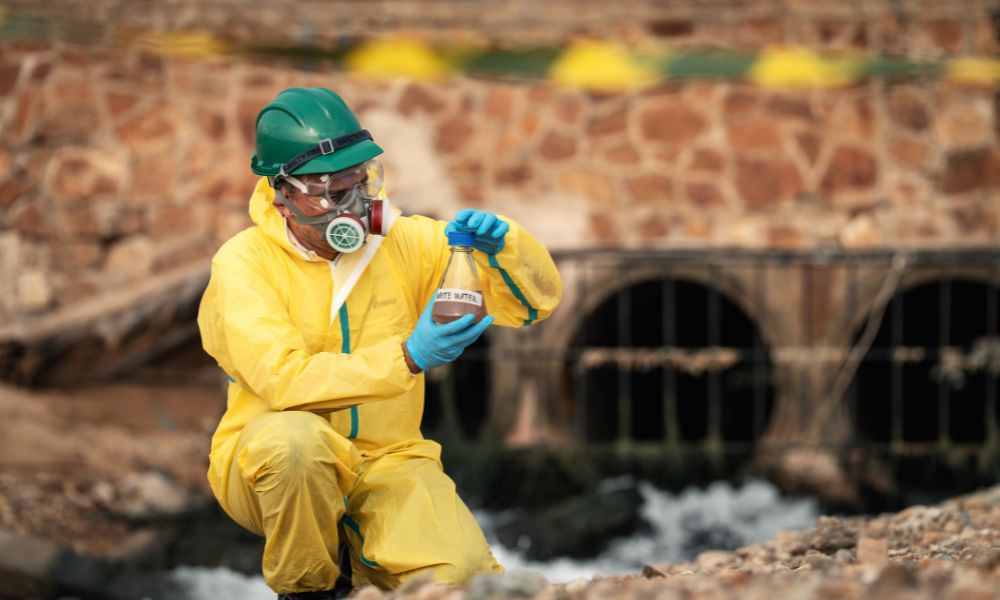
Chemical resistance is application-specific
A material that performs well against one chemical may be unsuitable for another. Concentration, temperature and exposure duration can change the result significantly. For this reason, the thread and finished seam must be validated under realistic process conditions.
Key factors to consider
- Chemical medium: Identify the exact acids, bases, solvents, cleaning agents or process chemicals involved.
- Temperature: Chemical resistance can change as temperature increases; thermal requirements must be evaluated at the same time.
- Exposure type: Continuous immersion, intermittent splashes, vapour exposure and cleaning cycles create different loads.
- Mechanical stress: Filtration and technical products may also require high abrasion resistance and flex durability.
- Product validation: Laboratory compatibility data should be supplemented by application-specific seam testing.
Typical applications
- Industrial filtration
- Chemical protective textiles
- Process textiles
- High-temperature filtration
- Technical covers and barriers
- Products exposed to acids, bases or aggressive cleaning media
Find the right AMANN solution
| AMANN product | Recommended use within this solution |
|---|---|
| PP-tech | Polypropylene continuous filament for filtration applications requiring high chemical resistance. |
| Zyex® | PEEK continuous filament for extreme chemical resistance, high mechanical wear and permanent temperatures up to approximately 250°C. |
Important technical note
Chemical compatibility must be assessed for the exact medium, concentration, temperature and exposure time. Application testing is essential.