
Intro
Fine and lightweight materials demand a sewing thread that is strong enough for reliable processing but subtle enough to preserve the appearance and drape of the fabric. A thread that is too coarse can create visible seam impressions, excessive stiffness, puckering or oversized needle holes.
The best result comes from matching thread size, construction, needle size, stitch density and tension to the material. Fine continuous filaments are particularly useful where a delicate, silk-like appearance and low seam presence are required. For skin-contact applications, soft microfilament constructions may also be relevant.
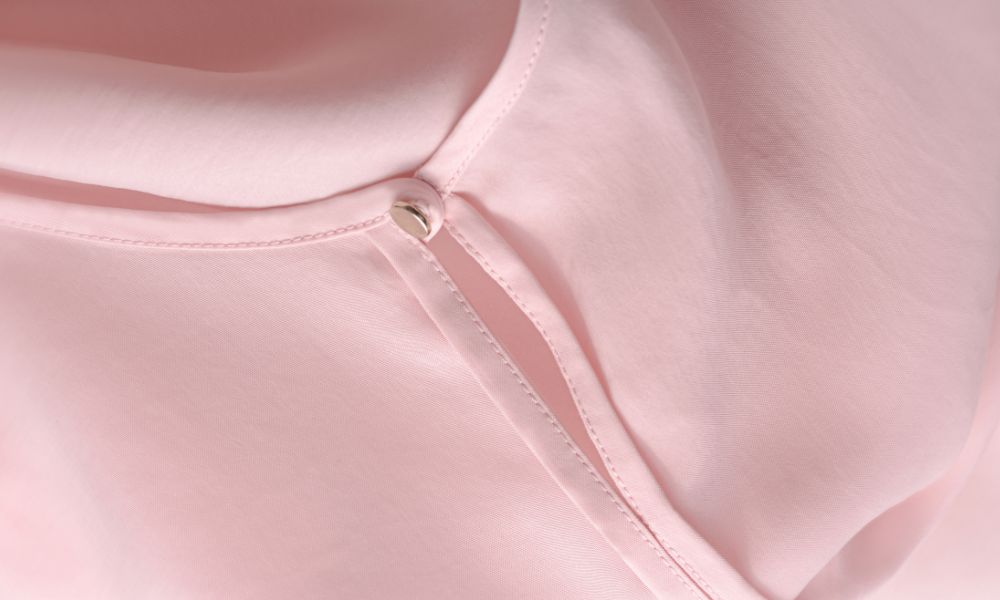
Why fine materials need a coordinated sewing concept
Lightweight fabrics often have limited dimensional stability and may react strongly to needle penetration, thread tension and differential feeding. The objective is to use the smallest practical thread and needle combination while still meeting the required seam strength and production reliability.
Key factors to consider
- Thread size: Use the finest thread that still provides the necessary seam strength and sewing performance.
- Needle size and point: The needle should be as small as practical and selected according to the material structure to reduce visible penetration damage.
- Seam impression: Fine threads and balanced tensions help prevent the seam from showing through on the face side.
- Stitch density: Too many stitches can perforate or stiffen delicate material; too few may reduce seam security.
- Material handling: Feed settings, presser-foot pressure and thread tension should be adjusted to avoid puckering and distortion.
Typical applications
- Fine shirts and blouses
- Lingerie and delicate underwear
- Lightweight dresses
- Down jackets and quilts
- Sheer fabrics
- Fine linings
- Monograms and delicate embroidery details
Find the right AMANN solution
| AMANN product | Recommended use within this solution |
|---|---|
| Serafil fine | Fine, silk-like and semi-transparent continuous filament for delicate sewing, blindstitching, fine overedging, down processing and detailed embroidery. |
| Serafil fine Recycled | The recycled alternative for fine materials, made from 100% recycled polyester and available as GRS certified. |
| Serafil fine Recycled WRe | Fine recycled continuous filament with a PFAS-free water-repellent finish for lightweight outdoor and down applications. |
| Sabasoft | Extra-soft texturised microfilament for fine close-to-skin seams where comfort is the main requirement. |
| Saba 150 / 180 | Fine core spun options for lightweight apparel where a textile appearance and reliable all-round sewing performance are required. |
Important technical note
The suitability of a sewing thread depends on the complete combination of material, seam construction, stitch type, needle, machine settings and finishing processes. Individual sewing trials and application-specific testing are recommended before production.